

Founders
For more than a century, the Miller family has helped shape the land, agriculture, and wine industry of Washington’s Yakima Valley. The story of Airfield Estates begins not with a winery, but with a pioneer who believed in the potential of dryland farms, irrigation, and the future of agriculture in the Northwest.
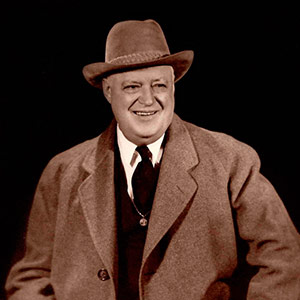 Howard Lloyd Miller
Founder of Our Family Farm
Howard Lloyd Miller was born in 1884 in Lanark, Illinois, and moved west in 1907, eventually settling in Sunnyside, Washington. Recognizing the Yakima Valley’s agricultural promise, he began acquiring farmland—often without irrigation—with the belief that water would one day transform the region.
H. Lloyd became a central figure in the effort to bring irrigation to the higher elevations of the valley. He helped organize what would become the Roza Irrigation District, serving in leadership roles for decades and advocating tirelessly for the project. Miller and other landowners made numerous trips to Washington, D.C., lobbying for federal support, often at their own expense.
The Roza Canal was finally funded in 1935 and completed in the following decades, transforming thousands of acres of farmland—including the property that would become Airport Ranch.
During World War II, Miller leased a portion of his land for the construction of a pilot training center, where Army Air Corps reservists trained in open-cockpit biplanes. After the airbase closed in 1944, Miller purchased the buildings at auction and converted the site into the headquarters of the family farm, which became known as Airport Ranch.
His vision, persistence, and leadership laid the foundation for generations to come.
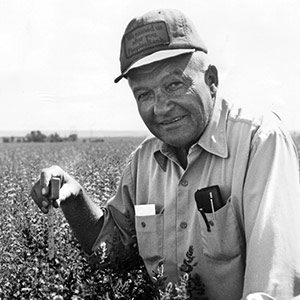 Donald Deets Miller
Founder of Our Estate Vineyard
Donald “Don” Miller, son of H. Lloyd Miller, was raised on the family ranch and served overseas during World War II before returning home to farm alongside his father. Throughout the 1950s and 1960s, Don helped expand a highly diversified agricultural operation that included asparagus, alfalfa, potatoes, onions, oats, cattle, hogs, mint, and sugar beets.
In the late 1960s, Don began exploring the potential of wine grapes in Sunnyside. In 1967, he planted Chardonnay, Riesling, Gewürztraminer, and Cabernet Sauvignon as trial vines to see what would thrive in the region’s soils and climate. Soon after, he partnered with a local nursery to propagate additional varietals, laying the foundation of what would become our estate vineyard.
These plantings marked the beginning of the family’s transition from diversified farming to viticulture—helping shape the future of winegrowing in the Yakima Valley and setting the stage for Airfield Estates Winery decades later.
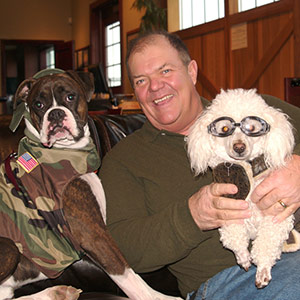 Michael Lloyd Miller
Founder of Airfield Estates Winery
Mike Miller, son of Don Miller, grew up working on the ranch and became the third generation to carry on the family’s agricultural legacy. After serving in the United States Navy during the Vietnam War and completing his education at Washington State University, Mike returned home determined to build the future of the farm.
In the late 1970s, as sugar beet processing plants closed in Washington, Mike recognized the growing promise of the state’s wine industry. The family began expanding wine grape plantings and refining viticulture practices through years of experimentation, learning firsthand how to grow premium wine grapes in Yakima Valley conditions.
Over time, the vineyard expanded to what it is today—over 800 acres of wine grapes and 350 acres of Concord juice grapes.
In 2005, Mike founded Airfield Estates Winery, bringing the family’s estate-grown fruit into the bottle under its own label. The Prosser Tasting Room opened in 2007, followed by a second tasting room in Woodinville in 2010. As the winery continued to grow, production was relocated to a new facility at the estate vineyard in 2014, allowing winemaking to take place even closer to the vines.
Today, the fourth generation—Marcus Miller and Lori Stevens—continues the family’s commitment to farming, winemaking, and hospitality, carrying forward a legacy that began more than a century ago.